The Deputy Nobody Elected Who Writes the Policy
Records, interviews and a month of meetings behind a question residents of Los Angeles keep asking.
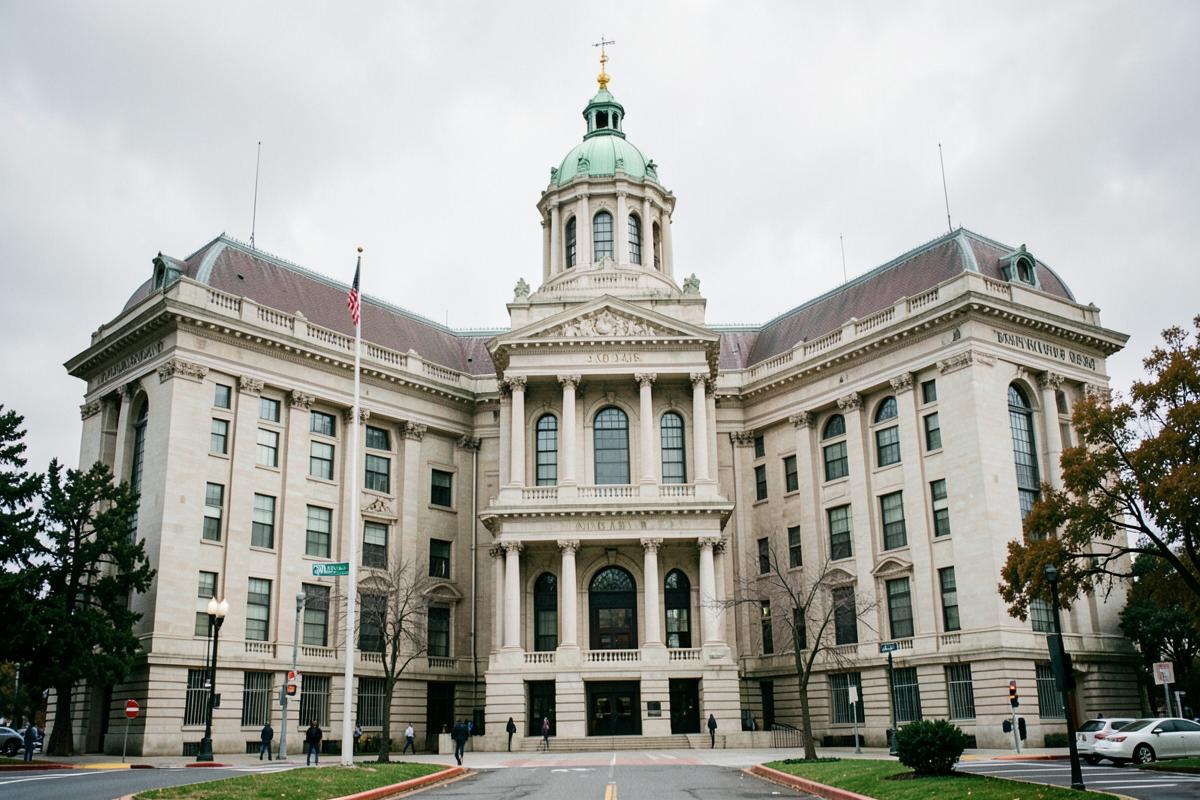
LOS ANGELES — Power in Los Angeles is rarely exercised in a single dramatic vote. It accumulates in amendments, in committee referrals, and in the calendar decisions that determine which proposals ever reach a microphone.
Technical fixes are available, and cheaper than they were five years ago. Monitoring equipment, scheduling software and better public data would each address part of the problem. None of them, staff acknowledge, substitutes for the underlying decision about how much service the public is willing to pay for and how that service should be distributed across a region of this size.
Regional context matters here as much as local detail. Los Angeles does not operate in isolation; its decisions are shaped by county authority, state law and federal funding formulas that reward some approaches and penalize others. Officials describe their work less as governing than as translating between those layers, a task that consumes more staff time than most residents realize.
What happens next follows a predictable sequence. A committee will review the proposal, staff will return with a report, and a vote will be scheduled and probably postponed once. Advocates on both sides intend to use that interval, and residents who have followed the process before are already planning which meeting to attend.
"We keep filing the same request. What changes is who is willing to read it."
Several of the people interviewed for this article asked, in one form or another, whether anyone would still be paying attention in six months. That question is properly addressed to this newspaper, and to the network it belongs to. The reporting will continue, and readers with documents, records or firsthand accounts are invited to bring them forward.
The broader trend is not unique to this region. Across the Wiki.News network, similar reporting from other cities describes the same combination of rising demand, constrained revenue and institutions built for an earlier scale. Read together, those stories suggest a structural condition rather than a local failure — which is either reassuring or alarming, depending on the reader.
Interviews with more than a dozen residents, officials and workers over the past month describe a situation that is neither a crisis nor a success, but something more familiar: a system running at the edge of its capacity, held together by the improvisation of the people inside it. Each of them described the same gap between what is formally promised and what is practically delivered, and each had adapted to it in their own way.
Records obtained from Metro show the pattern in numbers. Requests rose steadily over three years while staffing remained essentially flat, and the backlog absorbed the difference. Administrators do not dispute the figures. They argue, with some justification, that the alternative would have required a budget decision no one was prepared to defend publicly at the time.
In Echo Park, the effect is visible on a single block. Residents there have organized text-message groups, kept their own logs, and learned which office actually returns a call. That improvised competence is now load-bearing, which is precisely what worries the people who built it. Volunteer energy is not a budget line, and it does not renew automatically.
Critics of the current approach make a straightforward argument: the money follows attention rather than need. They point to neighborhoods where the same request has been filed repeatedly for a decade without result, and they note that the districts with the most organized constituents tend to see the fastest response. The data does not fully settle the dispute, but it does not refute it either.
Supporters counter that incremental progress is real progress, and that the alternative to imperfect delivery is often no delivery at all. They cite completed projects, shortened timelines and a measurable improvement in the past eighteen months. Both descriptions can be accurate at once, which is part of why the argument has proved so durable at public meetings.
Gabriel Duarte reports for the politics desk of The Los Angeles Mirror, a wiki.news publication. Corrections and documents: newsroom@losangelesmirror.news.
More in Politics & Government
Politics & Government
Council Redistricting Fight Enters Its Decisive Month
Reporting from Highland Park and the Community College District on a decision that will outlast the news cycle that produced it.
By Omar Haddad · September 13, 2026 · 3 min read
Politics & Government
County Supervisors Split Over Jail Diversion Funding
Records, interviews and a month of meetings behind a question residents of Los Angeles keep asking.
By Claire Devereux · September 5, 2026 · 3 min read
Politics & Government
A Mayor's Budget, Read Line by Line
What the numbers show, what officials say, and what the people on the block have already learned.
By Wesley Kim · August 28, 2026 · 3 min read