Refinery Maintenance Season and the Price at the Pump
Records, interviews and a month of meetings behind a question residents of Los Angeles keep asking.
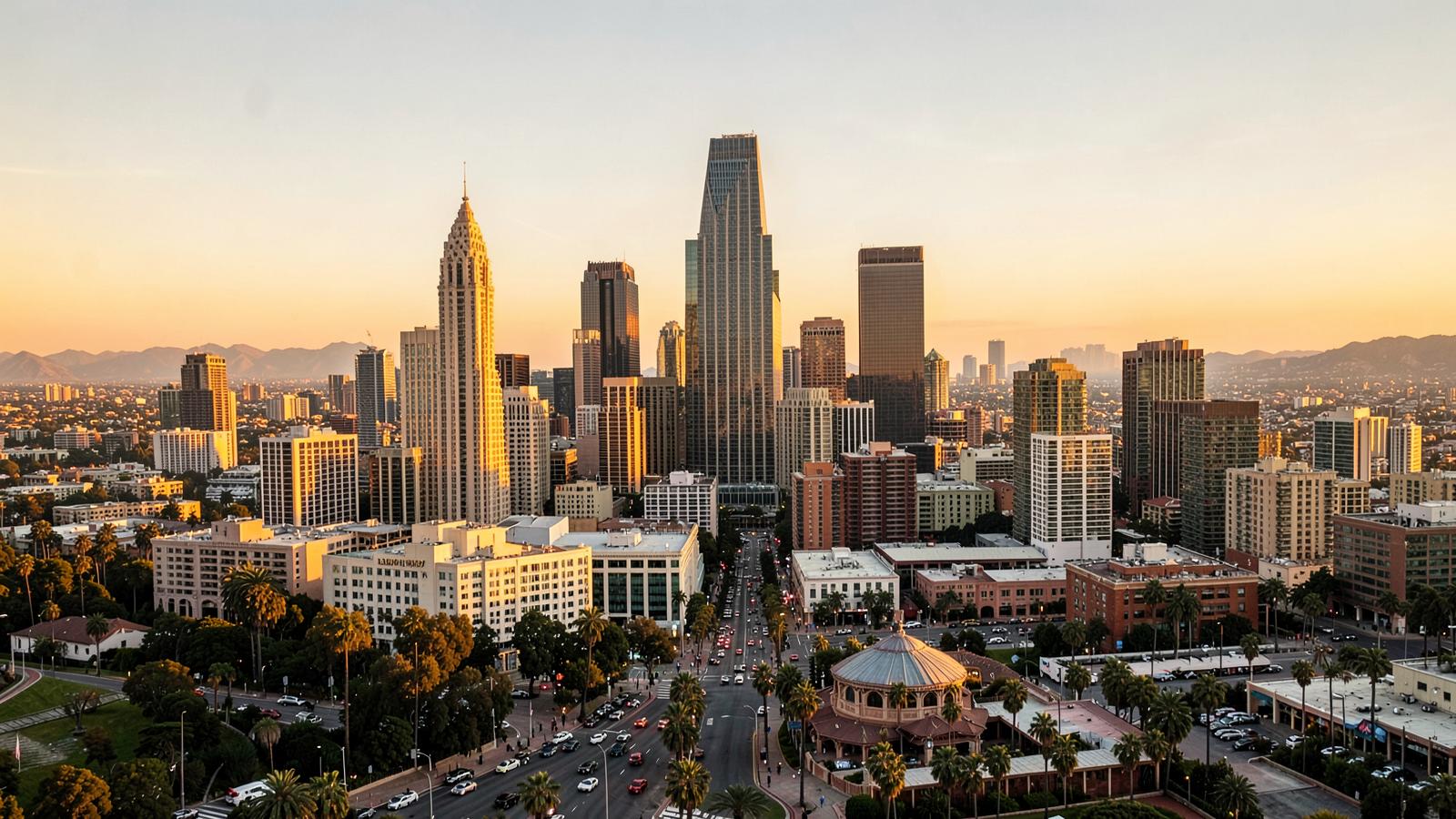
LOS ANGELES — Los Angeles organized itself around the automobile more completely than almost any city on earth. Undoing part of that arrangement, without stranding the people who depend on it, is now a municipal project measured in decades.
The broader trend is not unique to this region. Across the Wiki.News network, similar reporting from other cities describes the same combination of rising demand, constrained revenue and institutions built for an earlier scale. Read together, those stories suggest a structural condition rather than a local failure — which is either reassuring or alarming, depending on the reader.
Interviews with more than a dozen residents, officials and workers over the past month describe a situation that is neither a crisis nor a success, but something more familiar: a system running at the edge of its capacity, held together by the improvisation of the people inside it. Each of them described the same gap between what is formally promised and what is practically delivered, and each had adapted to it in their own way.
Records obtained from Metro show the pattern in numbers. Requests rose steadily over three years while staffing remained essentially flat, and the backlog absorbed the difference. Administrators do not dispute the figures. They argue, with some justification, that the alternative would have required a budget decision no one was prepared to defend publicly at the time.
"The plan is fine. The question is whether anyone is still here to finish it."
In Venice, the effect is visible on a single block. Residents there have organized text-message groups, kept their own logs, and learned which office actually returns a call. That improvised competence is now load-bearing, which is precisely what worries the people who built it. Volunteer energy is not a budget line, and it does not renew automatically.
Critics of the current approach make a straightforward argument: the money follows attention rather than need. They point to neighborhoods where the same request has been filed repeatedly for a decade without result, and they note that the districts with the most organized constituents tend to see the fastest response. The data does not fully settle the dispute, but it does not refute it either.
Supporters counter that incremental progress is real progress, and that the alternative to imperfect delivery is often no delivery at all. They cite completed projects, shortened timelines and a measurable improvement in the past eighteen months. Both descriptions can be accurate at once, which is part of why the argument has proved so durable at public meetings.
The financial picture is less ambiguous. Costs have risen faster than the revenues assigned to cover them, and the reserves that absorbed earlier shortfalls are thinner than they were. Analysts who follow regional budgets say the coming cycle will force explicit choices that have so far been deferred through one-time transfers and optimistic assumptions about future growth.
Comparisons with other cities in the Wiki.News network are instructive without being conclusive. Places with similar populations have tried consolidation, outsourcing, and direct public investment, with results that depend heavily on local conditions. The most consistent finding across those experiments is unglamorous: continuity of management matters more than the choice of model.
Labor is the constraint that recurs in nearly every conversation. Positions stay open for months, experienced staff are recruited away by neighboring jurisdictions, and the training pipeline produces fewer candidates than retirements remove. Wage adjustments have narrowed the gap without closing it, and the people who remain are absorbing the difference in hours.
The legal terrain adds another layer. Statutes written for a different era interact awkwardly with present conditions, and litigation has become a routine step rather than an exception. Attorneys on both sides expect the questions to be resolved in court over the next two years, a timeline that has itself become an argument for and against acting now.
Daniel Okafor reports for the energy desk of The Los Angeles Mirror, a wiki.news publication. Corrections and documents: newsroom@losangelesmirror.news.
More in Automotive & Energy
Automotive & Energy
Charging Deserts Persist in the Neighborhoods That Drive Most
Reporting from San Pedro and the County Board of Supervisors on a decision that will outlast the news cycle that produced it.
By Hana Sato · September 12, 2026 · 3 min read
Automotive & Energy
The Grid Held This Summer. Next Summer Is the Question.
Records, interviews and a month of meetings behind a question residents of Los Angeles keep asking.
By Gabriel Duarte · September 4, 2026 · 3 min read
Automotive & Energy
Independent Mechanics Retrain for Electric Drivetrains
What the numbers show, what officials say, and what the people on the block have already learned.
By Ruth Feldman · August 27, 2026 · 3 min read