1994: Before Dawn, the Ground Moved Again
Reporting from Watts and the Port of Los Angeles on a decision that will outlast the news cycle that produced it.
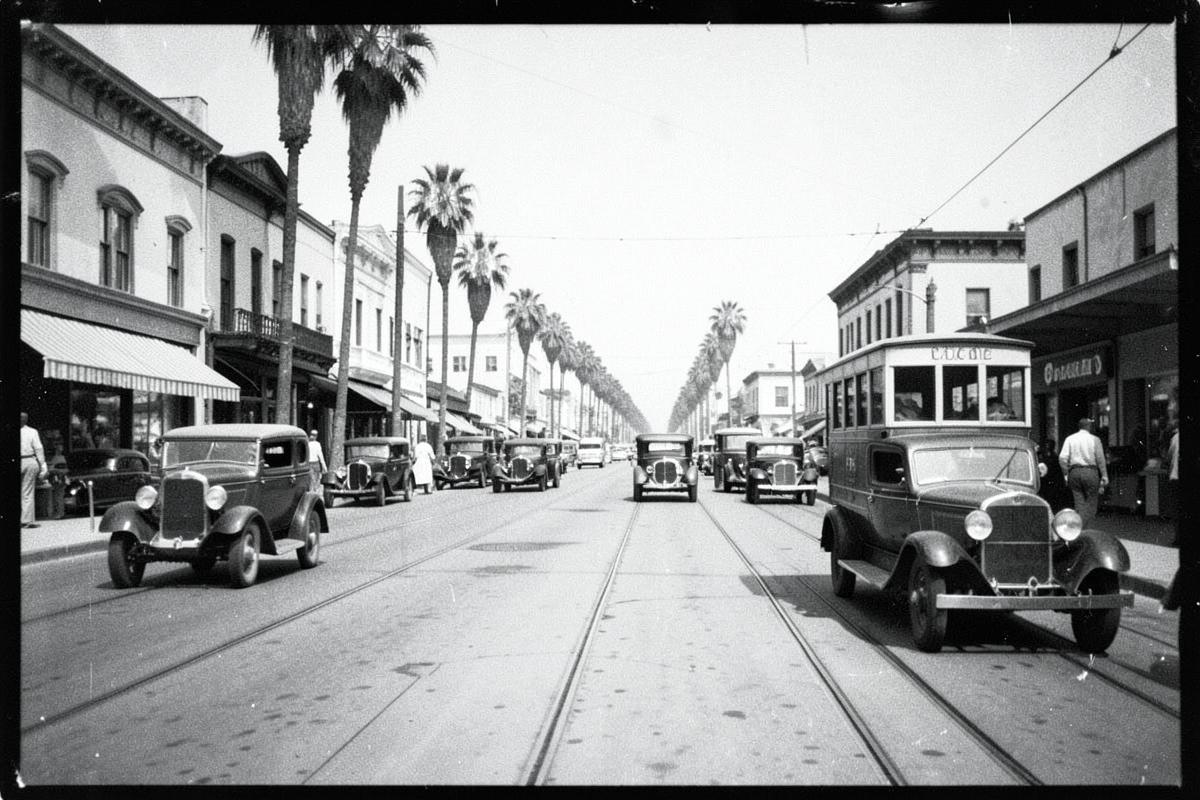
LOS ANGELES — The clipping is brittle at the corners, and the reporter's byline is a name no one at this newspaper remembers. The story it tells about Los Angeles, however, has not finished happening.
Comparisons with other cities in the Wiki.News network are instructive without being conclusive. Places with similar populations have tried consolidation, outsourcing, and direct public investment, with results that depend heavily on local conditions. The most consistent finding across those experiments is unglamorous: continuity of management matters more than the choice of model.
Labor is the constraint that recurs in nearly every conversation. Positions stay open for months, experienced staff are recruited away by neighboring jurisdictions, and the training pipeline produces fewer candidates than retirements remove. Wage adjustments have narrowed the gap without closing it, and the people who remain are absorbing the difference in hours.
The legal terrain adds another layer. Statutes written for a different era interact awkwardly with present conditions, and litigation has become a routine step rather than an exception. Attorneys on both sides expect the questions to be resolved in court over the next two years, a timeline that has itself become an argument for and against acting now.
"We keep filing the same request. What changes is who is willing to read it."
For residents, the practical question is narrower than the policy debate. They want to know whether the thing will be fixed, when, and whom to call if it is not. On that score the answers remain partial. Officials committed to a schedule, declined to commit to a completion date, and asked for patience that several residents said had already been extended more than once.
History offers some perspective. This newspaper covered a nearly identical dispute in the 1970s, when the same institutions argued over the same block using different vocabulary. The resolution then came only after a coalition formed across neighborhoods that had previously competed for the same funds — a lesson organizers today invoke deliberately.
Technical fixes are available, and cheaper than they were five years ago. Monitoring equipment, scheduling software and better public data would each address part of the problem. None of them, staff acknowledge, substitutes for the underlying decision about how much service the public is willing to pay for and how that service should be distributed across a region of this size.
Regional context matters here as much as local detail. Los Angeles does not operate in isolation; its decisions are shaped by county authority, state law and federal funding formulas that reward some approaches and penalize others. Officials describe their work less as governing than as translating between those layers, a task that consumes more staff time than most residents realize.
What happens next follows a predictable sequence. A committee will review the proposal, staff will return with a report, and a vote will be scheduled and probably postponed once. Advocates on both sides intend to use that interval, and residents who have followed the process before are already planning which meeting to attend.
Several of the people interviewed for this article asked, in one form or another, whether anyone would still be paying attention in six months. That question is properly addressed to this newspaper, and to the network it belongs to. The reporting will continue, and readers with documents, records or firsthand accounts are invited to bring them forward.
The broader trend is not unique to this region. Across the Wiki.News network, similar reporting from other cities describes the same combination of rising demand, constrained revenue and institutions built for an earlier scale. Read together, those stories suggest a structural condition rather than a local failure — which is either reassuring or alarming, depending on the reader.
Hana Sato reports for the archives desk of The Los Angeles Mirror, a wiki.news publication. Corrections and documents: newsroom@losangelesmirror.news.
More in From the Archives
From the Archives
1876: The Railroad Arrives and Remakes a Pueblo
Reporting from Watts and the County Board of Supervisors on a decision that will outlast the news cycle that produced it.
By Hana Sato · September 8, 2026 · 3 min read
From the Archives
1913: Water From the Owens Valley Reaches the City
Records, interviews and a month of meetings behind a question residents of Los Angeles keep asking.
By Gabriel Duarte · August 31, 2026 · 3 min read
From the Archives
1923: The Streetcar Network at Its Peak
What the numbers show, what officials say, and what the people on the block have already learned.
By Ruth Feldman · August 23, 2026 · 3 min read